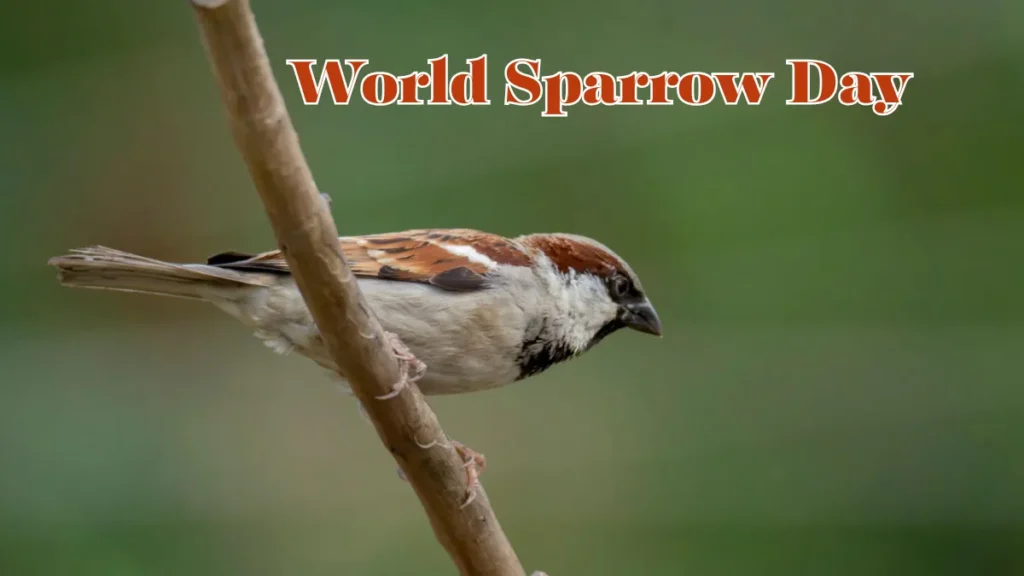
World Sparrow Day: The soft “chirp-chirp” of sparrows was once a familiar sound that marked the beginning of mornings in many homes. These tiny birds, with their round heads and brown-streaked wings, were an inseparable part of daily life. Today, however, that cheerful sound is fading. On World Sparrow Day, observed every year on March 20, the world pauses to reflect on the alarming decline of sparrows and the urgent need to protect them.
Why World Sparrow Day Matters
World Sparrow Day is more than just a symbolic observance. It is a global movement aimed at raising awareness about the decreasing population of sparrows and encouraging people to take simple yet effective conservation steps.
The initiative began in 2010 through a collaboration between the Nature Forever Society of India and the Eco-Sys Action Foundation of France. The credit for launching this meaningful campaign goes to conservationist Mohammed Dilawar from Nashik, India, who started a grassroots movement to protect house sparrows. Today, more than 40 countries participate in World Sparrow Day, making it a truly global environmental awareness event.
The message is clear: sparrows are disappearing, and their survival depends on collective human effort.
The Disappearing Chirp in Concrete Cities
Urbanization has transformed landscapes across the world. As cities expand with concrete buildings, glass structures, and shrinking green spaces, sparrows are losing their natural habitats.
There was a time when sparrows built nests in tiled roofs, ventilators, and small openings in traditional homes. Modern architecture, however, leaves little room for nesting. Sealed buildings, lack of open spaces, and reduced vegetation have made cities less welcoming for these birds.
Additionally, increasing pollution, use of pesticides, and scarcity of food sources have further contributed to their decline. The once lively presence of sparrows in courtyards, balconies, and gardens has now become rare in many urban areas.
Why Sparrows Are Important for the Environment
Sparrows may be small, but their role in maintaining ecological balance is significant.
They act as natural pest controllers by feeding on insects, larvae, and small pests. This helps in protecting crops and maintaining agricultural health. Their diet also includes seeds and grains, making them an important part of the food chain.
Interestingly, sparrows also contribute to pollination. While searching for food, they often land on flowers, indirectly aiding the transfer of pollen. This small contribution plays a role in sustaining plant life and biodiversity.
The disappearance of sparrows is not just about losing a bird species—it is a warning sign of environmental imbalance.
Fascinating Facts About Sparrows
Sparrows are social and adaptive birds, closely associated with human settlements. They are rarely found living alone and usually move in small groups or flocks.
One interesting behavior is that male sparrows often build nests to attract females. Nest-building is not just a survival activity but also a part of their mating ritual.
Although they are primarily land birds, sparrows can swim quickly if needed, especially in emergencies. They are highly protective by nature, especially when it comes to their nests and young ones.
Sparrows are incredibly adaptable and can live in both urban and rural environments. Unlike many bird species, they are not restricted to forests or specific habitats. Their ability to coexist with humans has historically been one of their greatest strengths.
The average lifespan of a sparrow is around 4 to 5 years, though many do not survive that long due to environmental threats.
Simple Steps to Bring Sparrows Back
The good news is that saving sparrows does not require complex actions. Small efforts at the individual level can make a big difference.
If you have a balcony, terrace, or garden, consider placing a bowl of clean water and some grains for birds. During summer, water becomes extremely important, so ensure it is always available and regularly changed.
Using मिट्टी (earthen) bowls instead of plastic containers is highly recommended, as they keep water cooler and are more natural for birds.
You can also install small nest boxes in safe corners of your home. These artificial shelters can provide sparrows with a place to live and breed, especially in urban areas where natural nesting spaces are scarce.
Avoid using harmful pesticides in your garden, as they reduce the availability of insects that sparrows feed on. Planting native trees and shrubs can also help create a more bird-friendly environment.
A Collective Responsibility Beyond One Day
World Sparrow Day reminds us that conservation should not be limited to a single day. Protecting sparrows is a year-round responsibility.
Every individual action—no matter how small-contributes to a larger impact. When communities come together to support wildlife, positive change becomes possible.
The disappearance of sparrows is not just an environmental issue; it is also an emotional loss. These birds have been part of our childhood memories, cultural stories, and everyday life.
Also read: Bhujio Kotho Jamnagar Reopens in a Grand New Avatar After Restoration
Conclusion
As we observe World Sparrow Day, it is important to reflect on a simple question: where have the sparrows gone?
The answer lies in our changing lifestyles, urban expansion, and environmental neglect. But the solution also lies with us.
By taking small, conscious steps, we can bring back the cheerful chirping of sparrows to our homes. Let this day be a reminder to care for nature—not just on March 20, but throughout the year.
Because if sparrows survive, future generations will continue to wake up to the beautiful music of nature.