Netherlands Returns Rare 11th Century Chola Copper Plates to India After Centuries Abroad
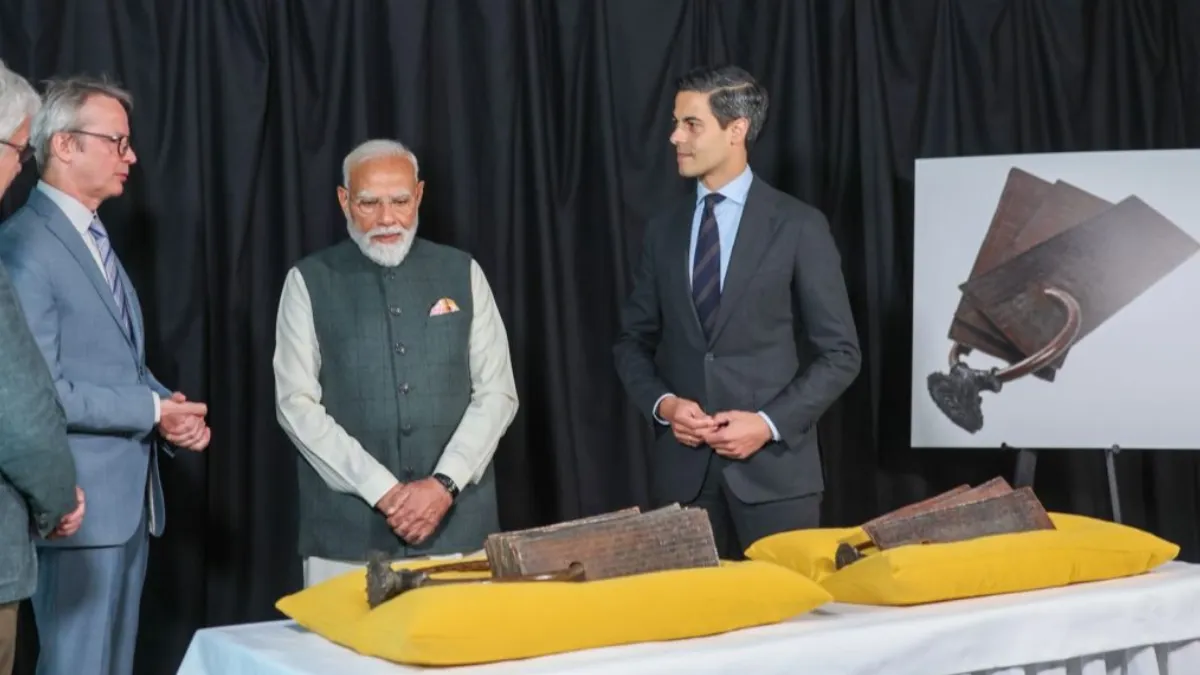
A rare collection of 11th century Chola copper plates has officially returned to India from the Netherlands, marking an important moment in the preservation of the country’s cultural and historical heritage. The centuries-old artifacts, widely known in Europe as the “Leiden Plates,” were handed over during Prime Minister Narendra Modi’s visit to the Netherlands as part of his European tour.
The return of these historic copper inscriptions ends a long diplomatic and cultural effort by India, which had been seeking their repatriation since 2012. Historians consider the plates among the most valuable surviving records connected to the powerful Chola dynasty, one of South India’s greatest empires.
A Significant Piece of Chola History
The collection includes 21 large and three smaller copper plates linked together by a bronze ring bearing the royal seal of the Chola rulers. Weighing nearly 30 kilograms, the inscriptions are written partly in Tamil and partly in Sanskrit, offering detailed insight into the political, religious, and maritime achievements of the Chola period.
Experts believe the 11th century Chola copper plates date back to the reign of Emperor Rajaraja Chola I, who ruled between 985 and 1014 CE. The inscriptions are also associated with his son, Rajendra Chola I, one of the most influential rulers in Indian history.
The Chola Empire was known for its military strength, administrative sophistication, temple architecture, and maritime trade networks that extended across Southeast Asia. The copper plates are regarded as an important documentary record of that era and provide scholars with valuable information about governance, grants, and cultural practices during the period.
PM Modi Welcomes the Return
Prime Minister Narendra Modi described the return of the artifacts as a proud and emotional moment for India. Sharing his reaction on social media, he said the repatriation of the 11th century Chola copper plates represented a major achievement in preserving India’s civilizational legacy.
He also highlighted the linguistic and cultural importance of the inscriptions, noting that much of the text is written in Tamil, one of the world’s oldest classical languages. Modi praised the Chola rulers for their contributions to Indian culture and maritime history, while thanking the Dutch government and Leiden University for cooperating in the return process.
According to the Prime Minister, the inscriptions reflect the greatness of the Chola dynasty and serve as a reminder of India’s deep historical connections with global trade and cultural exchange.
இந்தியர் அனைவருக்கும் ஒரு மகிழ்ச்சிகரமான தருணம்!
— Narendra Modi (@narendramodi) May 16, 2026
11-ம் நூற்றாண்டைச் சேர்ந்த சோழர்கால செப்பேடுகள், நெதர்லாந்தில் இருந்து இந்தியாவிற்குத் திரும்பவும் கொண்டுவரப்பட இருக்கின்றன. இது தொடர்பான விழாவில் பிரதமர் ராப் ஜெட்டன் அவர்களுடன் இணைந்து பங்கேற்றேன்.
சோழர் கால செப்பேடுகள், 21… pic.twitter.com/af4NWacMwt
How the Copper Plates Reached Europe
The historic plates are believed to have been taken to the Netherlands in the 18th century by Dutch scholar and collector Florentius Camper. Over time, the artifacts became part of collections preserved in the Dutch city of Leiden, eventually earning the name “Leiden Plates.”
For decades, the copper plates remained stored in secure facilities in the Netherlands and were primarily accessible to historians, researchers, and epigraphy experts upon request. The inscriptions gradually became well known among scholars studying Tamil literature, South Indian history, and ancient Indian inscriptions.
Leiden University, which housed the collection for many years, played a central role in preserving the artifacts until their return to India.
Also Read: Bhojshala History: A Unique Story of Knowledge, Culture, and Faith
Growing Global Focus on Repatriating Heritage
The return of the 11th century Chola copper plates comes amid increasing international attention on the repatriation of cultural treasures to their countries of origin. In recent years, several nations have sought the return of historical objects removed during colonial periods or taken abroad through private collections and trade.
India has also intensified efforts to recover ancient idols, manuscripts, sculptures, and archaeological objects from museums and private collections around the world. Cultural experts say such returns help restore historical continuity and reconnect communities with important parts of their heritage.
The arrival of the Chola-era copper plates is expected to generate renewed public interest in South Indian history and the enduring legacy of the Chola Empire. Historians believe the inscriptions will continue to serve as a valuable source for research while also becoming a symbol of India’s ongoing efforts to preserve and reclaim its cultural past.