Heavy Rain Alert: Delhi-NCR Battling Relentless Rain, Warnings Issued From Bihar to Bengal; Assam Faces Fresh Flood Threat
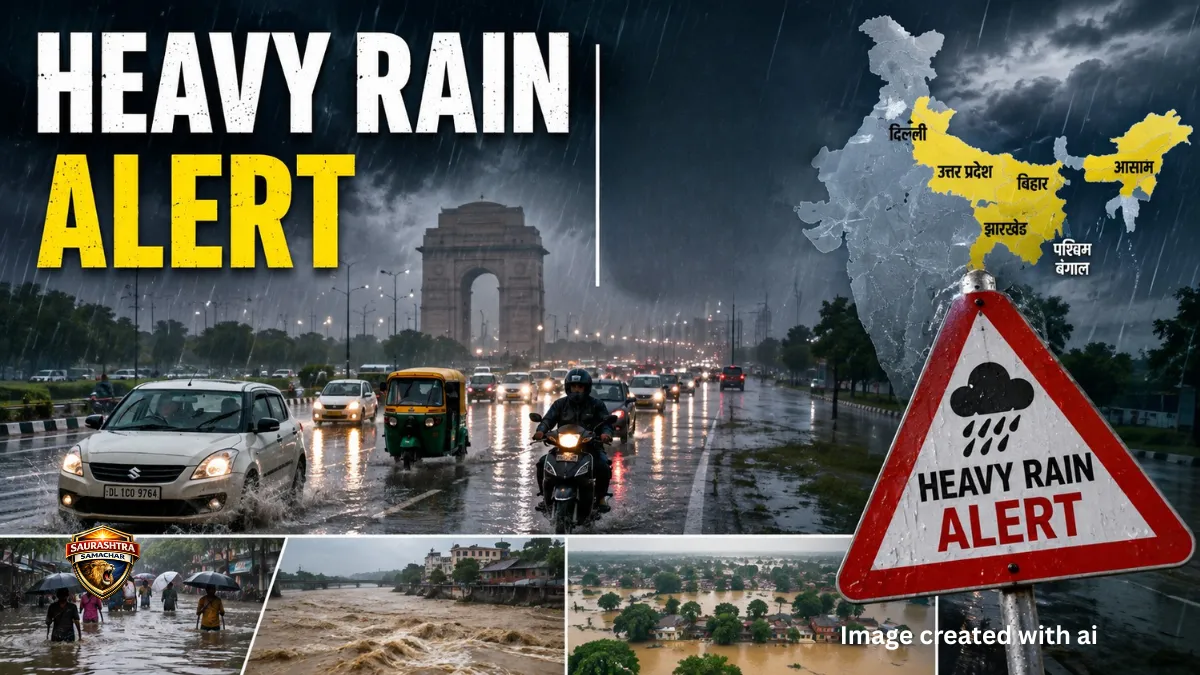
The Heavy Rain Alert remains in place across several parts of India as the monsoon continues to remain active. Delhi-NCR has been witnessing persistent rainfall, while multiple states across northern, eastern and northeastern India are also facing the possibility of heavy showers and thunderstorms. The India Meteorological Department has issued weather warnings for several regions, with the situation expected to remain unsettled in the coming days.
Heavy rainfall has already caused serious problems in parts of Assam and Odisha, where flooding has disrupted normal life. Kerala is also facing a difficult situation, with several areas experiencing conditions similar to flooding. Authorities and residents in vulnerable regions have been advised to remain cautious as more rain is expected.
Heavy Rain Alert in Delhi-NCR Causes Waterlogging and Traffic Disruptions
Delhi-NCR has received continuous rainfall for more than 30 hours, leading to waterlogging in several parts of the region. The prolonged showers have also affected traffic movement, with congestion reported on several major roads.
According to the weather department, the rainy conditions in the national capital may continue until August 13. Delhi is expected to record a maximum temperature of around 31 degrees Celsius and a minimum temperature of approximately 23 degrees Celsius today.
The combination of persistent rain and water accumulation has created difficulties for commuters, particularly during busy hours. Residents have been advised to remain alert while travelling through areas that are prone to waterlogging.
Rain Alert From Uttar Pradesh to Jharkhand
The weather department has predicted widespread rainfall across several districts of Uttar Pradesh. Eastern Uttar Pradesh is likely to experience widespread rain between August 8 and 10, prompting a yellow alert in the region.
Heavy rain accompanied by thunderstorms has also been forecast in different parts of Bihar and Jharkhand. The changing weather conditions have raised concerns about waterlogging and disruption in low-lying areas.
West Bengal is also expected to experience unsettled weather. Areas including Bankura, Murshidabad, Kolkata and Howrah may receive rain accompanied by strong winds. Rajasthan, Punjab, Haryana and Madhya Pradesh are also likely to remain under the influence of rainy weather.
Meanwhile, rainfall activity continues along the coastal belt of Maharashtra and in Goa, where the monsoon remains active.
Heavy Rain and Landslide Risk in the Hills
The monsoon situation remains challenging in Uttarakhand, where several rivers are flowing above dangerous levels. Heavy rainfall in the mountainous areas has also increased the risk of landslides, adding to concerns for people living in vulnerable locations and those travelling through hill roads.
The weather department has forecast heavy rain in Uttarakhand over the next seven days. Himachal Pradesh and Jammu and Kashmir have also been placed under weather alerts as rainfall activity continues across the Himalayan region.
Authorities in the hill states are keeping a close watch on river levels, landslide-prone areas and other locations that could be affected by intense rainfall.
Also read: Nita Ambani Donates Rs 21 Crore for Assam Flood Relief as Vantara Rescues Stranded Animals
Assam Under Fresh Flood Threat
A fresh flood threat is emerging in Assam, where a red alert has been issued amid concerns over worsening conditions. The northeastern state has already suffered significant damage from flooding this monsoon season.
According to the information provided, floods in Assam have claimed the lives of 97 people so far, while around 168,000 people have been seriously affected. The possibility of additional rainfall has increased concerns that the flood situation could deteriorate further in vulnerable districts.
With heavy rain expected across several states, residents are being urged to follow official weather advisories and avoid unnecessary travel through waterlogged or flood-prone areas.
The latest Heavy Rain Alert highlights the widespread impact of the active monsoon, stretching from Delhi-NCR and northern India to eastern states, the western coast and the Northeast. As rainfall continues, authorities are monitoring the situation closely, particularly in regions already dealing with flooding, rising river levels and landslide risks.
Related News