
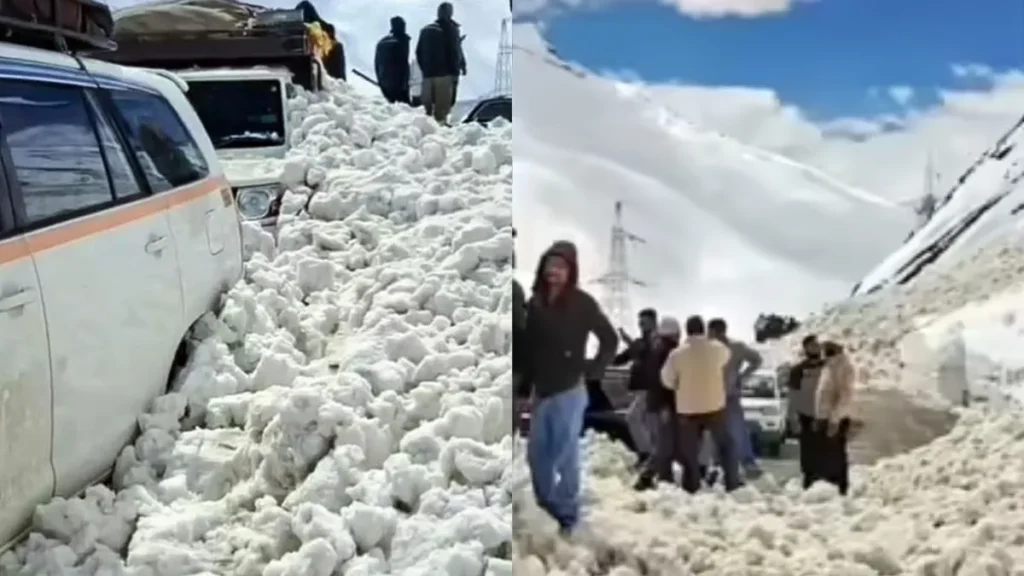
A devastating avalanche at zojila pass on Friday claimed at least seven lives and left five others injured, after a massive wall of snow swept across the Srinagar-Leh highway, burying multiple passenger vehicles under thick debris. The tragic incident has once again highlighted the dangers of traveling through one of India’s most challenging high-altitude routes.
Avalanche Strikes Key Route Linking Jammu & Kashmir and Ladakh
The avalanche occurred on the Ladakh side of zojila pass, a crucial mountain corridor that connects the Union Territories of Jammu & Kashmir and Ladakh. According to initial reports, several vehicles were moving along the highway when the sudden snow slide engulfed the area, trapping passengers inside.
Rescue teams rushed to the site shortly after the incident, but the scale of destruction made operations extremely difficult. The heavy accumulation of snow and unstable terrain slowed down efforts to reach those buried beneath the avalanche.
Casualties and Injuries Confirmed
Authorities confirmed that at least seven people lost their lives in the incident, while five others sustained injuries. The injured were immediately shifted to nearby medical facilities for treatment.
Union Minister Jitendra Singh expressed deep sorrow over the tragedy and assured that all necessary support is being provided to the victims and their families. In a statement, he extended condolences to those who lost their loved ones and emphasized that the government is closely monitoring the situation.
Emergency Response and Rescue Operations Underway
Soon after the avalanche struck zojila pass, emergency response teams were mobilized on a large scale. Personnel from the Border Roads Organisation (BRO), local police, and disaster relief units have been deployed to carry out rescue and clearance operations.
The Lieutenant Governor of Ladakh directed district officials and senior police officers from Kargil to reach the site immediately and coordinate relief efforts. All relevant agencies were placed on high alert to ensure swift action.
Rescue workers are using heavy machinery to remove snow and debris, while also searching for any individuals who may still be trapped under the avalanche.
Highway Blocked After Avalanche
The avalanche has completely blocked the Srinagar-Leh highway, also known as National Highway-1 (NH-1). This 434-kilometre-long route is the primary road link connecting Srinagar to Leh, making it strategically and economically significant.
Key Details of the Incident
| Category | Details |
|---|---|
| Location | Zojila Pass (Ladakh side) |
| Incident Type | Avalanche |
| Death Toll | 7 |
| Injured | 5 |
| Affected Route | Srinagar-Leh Highway (NH-1) |
| Rescue Agencies | BRO, Police, Disaster Relief Teams |
| Current Status | Highway blocked, rescue ongoing |
Authorities are working round the clock to clear the snow and restore traffic movement. However, due to the scale of the avalanche and weather conditions, reopening the highway may take time.
Why Zojila Pass is So Dangerous
Located at an altitude of approximately 11,575 feet, zojila pass is one of the most treacherous mountain passes in India. The route is known for its narrow roads, steep gradients, and unpredictable weather conditions.
During winter months, heavy snowfall frequently leads to avalanches, landslides, and road closures. These hazards make travel risky and often disrupt connectivity between Ladakh and the rest of the country.
Despite these challenges, the pass remains a lifeline for local residents, tourists, and the movement of essential supplies.
Zojila Tunnel Project: A Long-Term Solution
To address the recurring issue of seasonal closures and improve safety, the government is constructing the ambitious Zojila Tunnel project. Once completed, the tunnel will provide an all-weather connection between Ladakh and Kashmir.
Also Read: Eshwar Khandre Vantara controversy: Forest Minister Seeks Answers from PCCF Over Officials’ Visits
Zojila Tunnel Project Overview
| Feature | Details |
|---|---|
| Tunnel Length | 14.2 km |
| Width | 9.5 metres |
| Lanes | Two-lane |
| Altitude | Around 12,000 feet |
| Purpose | All-weather connectivity |
| Expected Impact | Reduced travel risk, improved connectivity |
The tunnel is expected to significantly reduce travel time and eliminate the risks associated with crossing zojila pass during extreme weather conditions. It will also enhance strategic mobility and boost economic development in the region.
Authorities Urge Caution
Following the avalanche, authorities have advised travelers to avoid the Srinagar-Leh highway until further notice. Weather conditions in high-altitude areas remain unpredictable, increasing the risk of further avalanches.
Officials are closely monitoring the situation and have assured that all necessary measures are being taken to prevent further loss of life.
Conclusion
The tragic avalanche at zojila pass serves as a stark reminder of the dangers posed by extreme weather in mountainous regions. While rescue operations continue and efforts are underway to restore normalcy, the incident underscores the urgent need for safer infrastructure and better preparedness.
As India moves forward with projects like the Zojila Tunnel, there is hope that such tragedies can be minimized in the future. For now, the focus remains on rescuing survivors, supporting victims, and ensuring the safety of those traveling through this vital yet perilous route.