Colombia Earthquake: Powerful 7.4 Magnitude Quake Reported in Colombia, Buildings Damaged and Casualties Reported
A powerful Colombia Earthquake struck parts of the South American country on Monday, triggering panic across several regions and sending residents rushing out of homes and buildings. Initial reports from seismic monitoring agencies put the earthquake at a magnitude of 7.4, while Colombia’s own geological authorities reported a lower preliminary magnitude of 6.7.
The earthquake was reportedly centered at a depth of around 115 kilometers underground, with the epicenter located near San José del Palmar, roughly 400 kilometers west of Bogotá. Strong tremors were felt across a wide area, including the Colombian capital. The shaking was also reportedly felt in parts of neighboring Venezuela and Ecuador.
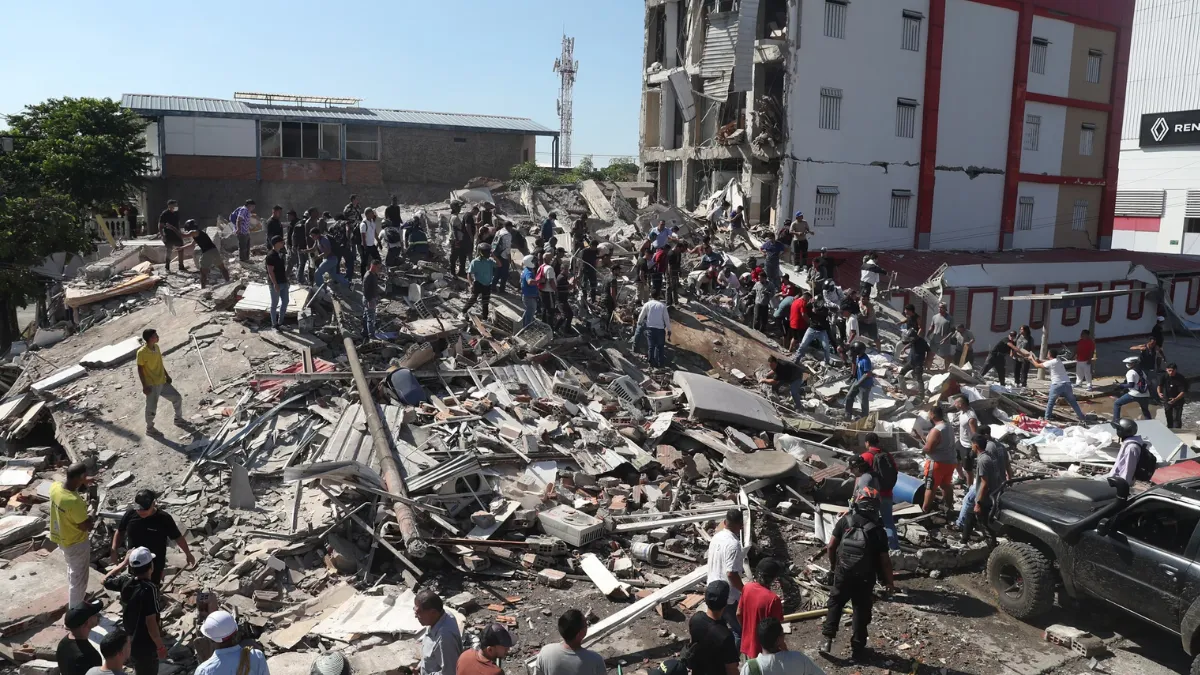
Early reports indicated deaths and injuries, along with damage to buildings in several locations. However, rescue and assessment operations were still underway, meaning casualty and damage figures could change as authorities gather more information from affected areas.
Colombia Earthquake Causes Panic Across Several Regions
The Colombia Earthquake caused widespread alarm as strong shaking was reported in different parts of the country. Residents in several cities reportedly left their homes and moved into streets, open spaces and other safer locations as the ground began to shake.
People living in taller buildings were particularly concerned because even a deep earthquake can produce noticeable movement in high-rise structures. In several areas, residents reportedly remained outside after the initial tremors because of fears that additional shaking could follow.
Authorities were assessing infrastructure, roads and buildings to determine the full extent of the damage. Emergency teams were also working to identify areas where people may require medical assistance or evacuation.
Because the earthquake affected a broad area, officials were expected to continue updating information as field teams reached more locations.
Strong Tremors Felt in Bogotá and Beyond
Although the reported epicenter was far from Bogotá, strong tremors were felt in the capital and other parts of Colombia. The location of the earthquake near San José del Palmar placed the source several hundred kilometers away from Bogotá, but the strength of the event allowed seismic waves to travel over a large distance.
The earthquake was not limited to Colombia. Reports also indicated that tremors were felt in parts of Venezuela and Ecuador.
In major urban areas, people reacted quickly when the shaking began. Some evacuated buildings as a precaution, while others gathered in open areas away from structures, windows and other potential hazards.
Officials typically advise residents to remain alert after a major earthquake because aftershocks can occur following the main event. Buildings that appear intact from the outside can sometimes have structural damage that is not immediately visible.
Quibdó Reports Building Damage and Injuries
Quibdó, the capital of Colombia’s Chocó department, was among the areas reporting significant effects from the earthquake.
According to preliminary information attributed to Chocó Governor Nubia Carolina Córdoba-Curi, several people were injured and multiple buildings suffered damage in Quibdó. Local authorities began inspecting affected structures and assessing the condition of buildings in areas where the shaking was strongest.
The assessment is important because earthquake damage is not always immediately obvious. Cracks in walls, weakened columns, damaged foundations and other structural problems can create risks even when a building remains standing.
Emergency workers were therefore expected to focus not only on treating injured people but also on identifying unsafe structures and preventing additional casualties.
Local authorities were continuing to collect information from different communities as rescue and emergency response teams worked through the affected areas.
Why Did Agencies Report Different Earthquake Magnitudes?
One of the notable aspects of the Colombia Earthquake was the difference between the initial magnitude figures reported by seismic monitoring agencies.
The European-Mediterranean Seismological Centre, or EMSC, initially reported the earthquake at magnitude 7.4. Colombia’s Geological Service, meanwhile, reported an initial magnitude of 6.7.
Colombia’s National Unit for Disaster Risk Management also referred to a magnitude of 7.4, although some details regarding the depth differed between reports.
Differences in early earthquake measurements are not unusual. Immediately after a major earthquake, seismic agencies collect data from multiple monitoring stations. Those readings are analyzed to estimate the earthquake’s location, depth and magnitude.
As additional data becomes available, agencies may revise their initial calculations. This means the first magnitude reported shortly after an earthquake is not necessarily the final official figure.
For that reason, early reports should be treated as preliminary until authorities complete their analysis and issue updated information.
How Powerful Is a 7.4 Magnitude Earthquake?
A magnitude 7.4 earthquake is considered a major and powerful seismic event. However, the magnitude alone does not determine how much destruction an earthquake will cause.
Several factors influence the level of damage, including the depth of the earthquake, the distance between the epicenter and populated areas, local soil conditions, the quality of construction and the number of people living in affected locations.
A powerful earthquake can cause significant structural damage when it occurs close to densely populated areas, particularly where buildings are not designed to withstand strong ground movement.
In this case, the earthquake was reported to have occurred at considerable depth. A deeper earthquake can behave differently from a shallow earthquake, and the amount of shaking experienced at the surface depends on several geological and structural factors.
The type of ground beneath a city can also influence the intensity of shaking. Soft soil can sometimes amplify earthquake waves, while stronger geological formations may respond differently.
Therefore, assessing the actual impact requires more than simply looking at the magnitude.
Why Is Colombia Vulnerable to Earthquakes?
Colombia is located in a geologically active part of South America, making earthquakes a recurring natural hazard for the country.
Earthquakes occur because of movements within the Earth’s crust. The planet’s surface is divided into large tectonic plates that move slowly over time. Where these plates interact, enormous stresses can build up underground. When accumulated stress is released suddenly, seismic waves travel through the Earth and produce an earthquake.
Colombia lies close to several active tectonic structures and fault systems. The country’s Andean region is particularly important when discussing seismic activity. Areas around the Eastern Cordillera and regions toward the Pacific side of the country are also considered vulnerable to earthquakes.
Because of this geological setting, Colombia maintains seismic monitoring systems designed to detect earthquakes and provide information about their location and strength.
The country’s long history of seismic activity has also made earthquake preparedness, building standards and emergency response important parts of disaster management.
Colombia Has Experienced Major Earthquakes Before
The Colombia Earthquake is part of a much longer history of seismic activity in the country. Colombia has experienced several major earthquakes over the decades, some of which caused extensive loss of life and severe infrastructure damage.
One of the significant events occurred near Tumaco in 1979. The earthquake had an estimated magnitude of around 8 and caused serious destruction, particularly along Colombia’s Pacific coast.
The Tumaco earthquake remains an important example of how powerful seismic activity can affect coastal and populated communities. Events like this have highlighted the importance of earthquake-resistant construction, emergency planning and rapid disaster response.
Colombia’s experience with previous earthquakes has contributed to continued efforts to improve seismic monitoring and strengthen buildings against potential future events.
Also read: Who is Baba Vanga? The Life, Predictions, and Mystery Behind the Famous Bulgarian Mystic
Rescue and Damage Assessment Continue
Following the latest Colombia Earthquake, authorities and emergency teams have been working to determine the full extent of the damage.
Initial reports can change considerably during the first several hours after a major earthquake because communication networks may be disrupted and some remote communities can be difficult to reach.
Emergency officials generally need time to inspect roads, bridges, homes, public buildings and other infrastructure before providing a complete assessment.
The number of casualties may also change as rescue teams reach areas that were initially inaccessible. Reports of deaths and injuries in the early stages should therefore be considered preliminary until confirmed by relevant authorities.
For residents in affected areas, emergency officials are expected to continue emphasizing caution around damaged buildings and urging people to remain prepared for possible aftershocks.
What Happens After a Major Earthquake?
After a powerful earthquake, emergency authorities typically shift their attention from the initial shock to search and rescue, medical assistance, structural inspections and public safety.
Buildings showing cracks or other visible damage may require professional inspection before residents are allowed to return. Authorities also need to check critical infrastructure such as hospitals, roads, electricity networks, water systems and communication facilities.
At the same time, seismic monitoring agencies continue tracking the region for aftershocks and other changes in underground activity.
The final picture of the Colombia Earthquake will become clearer as authorities complete their assessments and update the magnitude, casualty figures and damage reports.
For now, the earthquake has highlighted once again the seismic risks faced by Colombia and the importance of strong construction, effective emergency planning and rapid response systems in reducing the impact of major natural disasters.
Related News