Ambalal Patel Vs Jayant Pandya: Rain Forecast Debate Sparks Discussion on Science and Traditional Weather Predictions
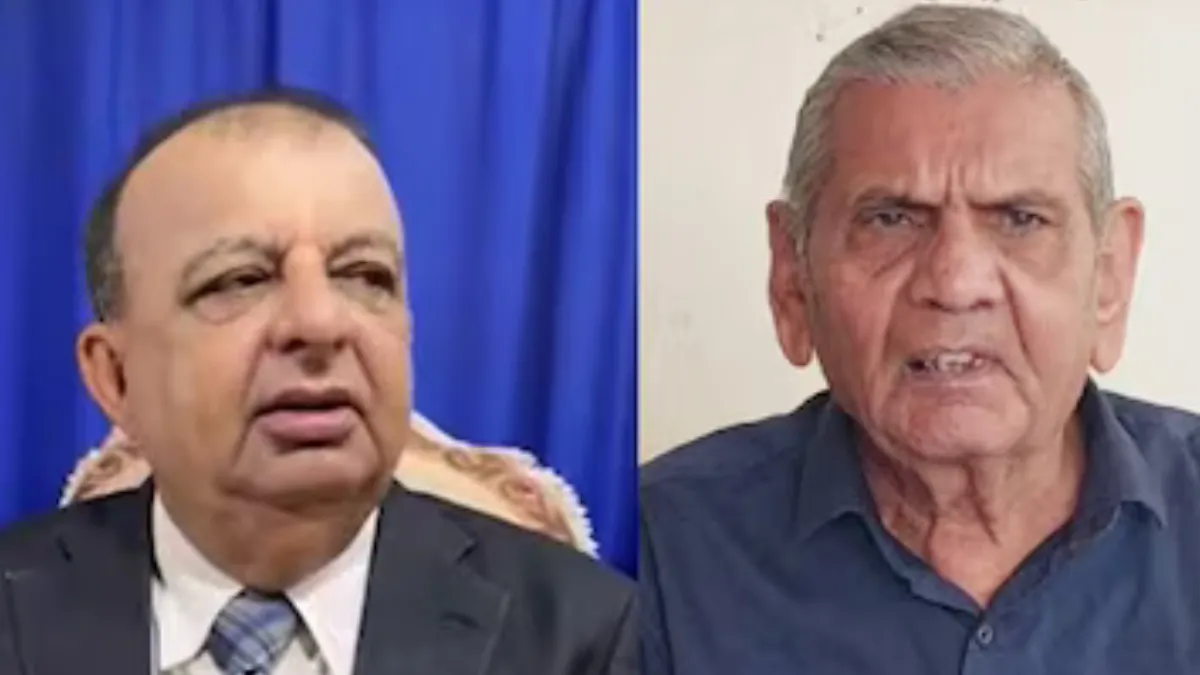
Ambalal Patel Vs Jayant Pandya: As Gujarat enters the monsoon season, rainfall forecasts have once again become a major topic of public discussion. This year, however, the focus is not only on when and where it will rain, but also on a growing dispute between two well-known figures with very different views on weather prediction. The debate between weather forecaster Ambalal Patel and Gujarat State Science Forum Chairman Jayant Pandya has triggered a wider conversation about the role of traditional forecasting methods versus modern scientific systems.
The controversy, widely referred to as Ambalal Patel Vs Jayant Pandya, has attracted attention from farmers, scientists, and the general public alike. At the center of the debate is a key question: Should people rely on traditional weather forecasting methods, or should official scientific agencies remain the only trusted source of weather information?
Jayant Pandya Questions Reliability of Traditional Forecasts
The dispute intensified after Jayant Pandya publicly criticized the forecasting methods used by Ambalal Patel. According to Pandya, weather forecasting is a scientific discipline that depends on advanced technology, data analysis, and continuous monitoring of atmospheric conditions.
He argued that institutions such as the India Meteorological Department (IMD) use satellite imagery, radar networks, computer models, and real-time weather data to generate forecasts. In his view, predictions that are not supported by scientific evidence can create confusion, particularly among farmers who often depend on weather information to make critical agricultural decisions.
Pandya emphasized that citizens should place greater trust in official meteorological agencies, which are backed by scientific research and established forecasting systems. He expressed concern that unofficial predictions may influence farming decisions and potentially lead to economic losses if the forecasts prove inaccurate.
Science Forum Cites Recent Forecasting Concerns
Jayant Pandya also referred to recent rainfall predictions made by a group of forecasters in Junagadh. According to him, forecasts suggesting significant pre-monsoon rainfall between late May and early June did not materialize as expected.
He claimed that several such predictions failed to match actual weather conditions and argued that repeated inaccurate forecasts can undermine public confidence. Pandya further stated that his organization has reviewed past predictions and believes that many unofficial weather forecasts have not consistently delivered reliable results.
The Science Forum maintains that weather-related information should be communicated through scientifically validated channels, especially during the monsoon season when farmers make important decisions regarding sowing and crop management.
Ambalal Patel Defends His Work and Experience
Responding to the criticism, Ambalal Patel strongly defended his forecasting methods and rejected allegations that he promotes superstition or misinformation.
Patel stated that he has spent decades studying weather patterns and agricultural conditions and that his work is intended to help farmers. He highlighted his educational background in agriculture and said that his forecasts are not based solely on astrology or planetary positions, as critics often suggest.
According to Patel, his predictions take into account multiple factors, including rainfall circulation patterns, developments in the Arabian Sea and the Bay of Bengal, and observations related to agricultural meteorology. He argued that traditional knowledge and long-term observation can complement scientific understanding rather than contradict it.
Patel also made it clear that he continues to provide forecasts because farmers seek his guidance. He remarked that if farmers ever stop finding value in his predictions, he would have no reason to continue issuing them.
Farmers at the Center of the Debate
One of the key concerns raised during the Ambalal Patel Vs Jayant Pandya controversy is the impact of weather forecasts on farmers. Agriculture in Gujarat remains heavily dependent on rainfall, making accurate weather information extremely important.
The Science Forum argues that unverified predictions can influence decisions regarding sowing, irrigation, and harvesting, potentially exposing farmers to financial risks. On the other hand, supporters of Ambalal Patel believe that his long experience and understanding of local weather patterns often provide practical insights that resonate with farming communities.
Many farmers have followed Patel’s forecasts for years, viewing them as an additional source of information alongside official weather bulletins. His supporters argue that traditional forecasting methods have historically played a role in rural decision-making and should not be dismissed outright.
Also read: Banas Hospital Rabies Case: Rare Infection After Mongoose Bite Leaves Doctors Surprised
Traditional Knowledge Versus Modern Science
Beyond the personal disagreement, the controversy reflects a broader debate that exists in many parts of India. Traditional weather prediction methods, often based on generations of observation, continue to hold influence in rural communities. At the same time, advances in meteorology have significantly improved the accuracy of scientific forecasting.
Experts note that modern weather forecasts are based on measurable data and sophisticated models, while traditional methods often rely on historical patterns and local environmental indicators. The challenge lies in determining how these two approaches can coexist without creating confusion for the public.
Also read: Motera DemolitionSparks Protests in Ahmedabad as Residents Lose Homes and Hope
A Debate Likely to Continue Through the Monsoon
As Gujarat experiences another active monsoon season, discussions surrounding weather predictions are unlikely to fade anytime soon. The clash between Ambalal Patel and Jayant Pandya has highlighted differing perspectives on how weather information should be generated and communicated.
While scientific institutions continue to advocate reliance on data-driven forecasts, supporters of traditional forecasting believe local knowledge still has value. For now, the debate remains unresolved, but it has sparked an important conversation about credibility, public trust, and the future of weather forecasting in Gujarat.
The Ambalal Patel Vs Jayant Pandya debate is no longer just about rainfall predictions. It has evolved into a larger discussion about balancing traditional experience with scientific evidence in a state where weather can have a profound impact on millions of lives.
Related News