Mumbai Police Arrest Man With Nearly 15,000 Allegedly Poison-Filled Capsules at Muharram Procession
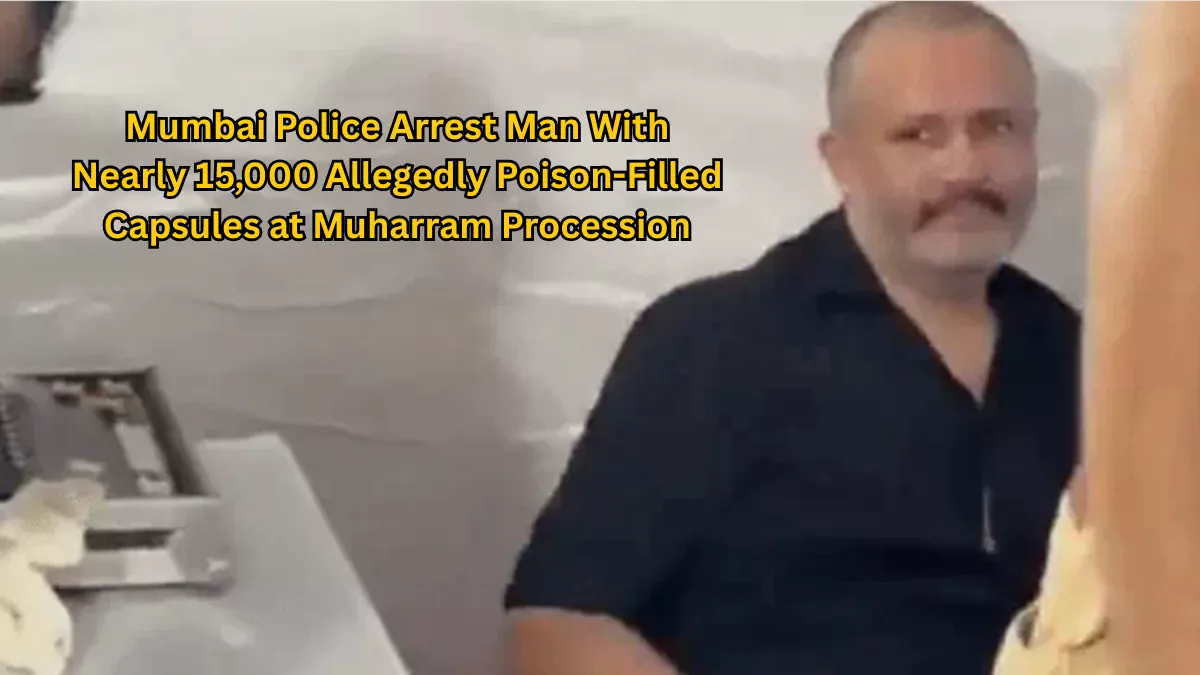
Mumbai: Police in Mumbai have arrested a man after recovering nearly 14,900 capsules that investigators allege were filled with a toxic substance commonly used as rat poison. The suspect was detained during a Muharram procession in the city’s Byculla area after officers noticed suspicious activity and launched an immediate investigation.
According to police officials, the man was allegedly moving through the procession while attempting to distribute capsules to members of the public. Investigators said he claimed the capsules were an effective medicine that could relieve different types of body pain, raising concerns after one participant reportedly fell ill.
Procession Participant Reportedly Became Ill
Police said the investigation began after a person attending the procession complained of stomach pain and vomiting. The individual reportedly told officers that he had consumed a capsule received from an unknown person during the event.
Based on the complaint, officers identified and detained the suspect for questioning. During the search, police recovered thousands of capsules that have since been seized as evidence.
The accused has been identified as Faiyaz, a resident of Pune who reportedly works in the paint business. The investigation remains ongoing.
Police Say Capsules Contained Zinc Phosphide
According to investigators, preliminary findings suggest each capsule contained around one gram of zinc phosphide, a highly toxic chemical widely used in rodenticides. Police further alleged that the suspect had obtained approximately 50 kilograms of the substance and was preparing to manufacture as many as 30,000 capsules.
Authorities stated that the seized capsules have been sent for forensic examination to confirm their contents.
Investigation Expands Into Background of the Suspect
Deputy Commissioner of Police Jayant Meena said preliminary questioning indicated that the capsules were allegedly being distributed without any legal authorization or pharmaceutical approval.
Police also said they are examining the suspect’s travel history after learning that he had visited Iran and Iraq in 2025. Investigators are working to determine the purpose of those visits and whether they have any connection to the current case. Officials have not announced any conclusions regarding those trips.
Authorities added that multiple aspects of the investigation remain under review, including possible motives, procurement of the chemical, and whether any other individuals were involved.
What Is Zinc Phosphide?
Zinc phosphide is a chemical compound primarily used as a rodenticide to control rat and mouse populations in agricultural and commercial settings. Because of its high toxicity, its sale, storage, and use are subject to strict regulation in India.
When swallowed, zinc phosphide reacts with stomach acid and moisture to produce phosphine gas, an extremely poisonous gas that interferes with the body’s ability to use oxygen at the cellular level. This can rapidly damage multiple organs.
Medical experts say symptoms of zinc phosphide poisoning may include:
- Severe vomiting and abdominal pain
- Difficulty breathing
- Dizziness or loss of consciousness
- A rapid drop in blood pressure
- Irregular heartbeat
- Liver and kidney damage
- Multi-organ failure in severe cases
Even relatively small amounts can be dangerous depending on factors such as age, body weight, and the quantity consumed. There is no specific antidote for zinc phosphide poisoning, and treatment generally focuses on supportive medical care to manage symptoms and improve the patient’s chances of recovery.
Regulations Governing Zinc Phosphide in India
In India, zinc phosphide is regulated as a pesticide under the Insecticides Act, 1968, along with related rules governing its manufacture, sale, and distribution.
Licensed dealers are required to maintain proper records of stock and sales, while packaging and labeling must comply with prescribed safety standards. Unauthorized sale or storage of large quantities can result in regulatory action, including fines, suspension or cancellation of licenses, and criminal prosecution.
If investigators establish that a toxic substance was intended to cause harm to individuals or the public, additional charges under the Bharatiya Nyaya Sanhita (BNS) may be considered, including offences related to attempted murder, criminal conspiracy, and acts endangering public safety.
Investigation Continues
The seized capsules are expected to undergo detailed forensic testing as investigators continue gathering evidence. Police have not announced whether additional arrests are likely, and the allegations against the accused remain under investigation.
Authorities have urged the public to avoid accepting or consuming medicines or capsules from unknown individuals during public gatherings and to immediately report any suspicious activity to the police.
Related News