Khambhat’s Sandalwood Taajiya Draws Crowds Ahead of Muharram Procession
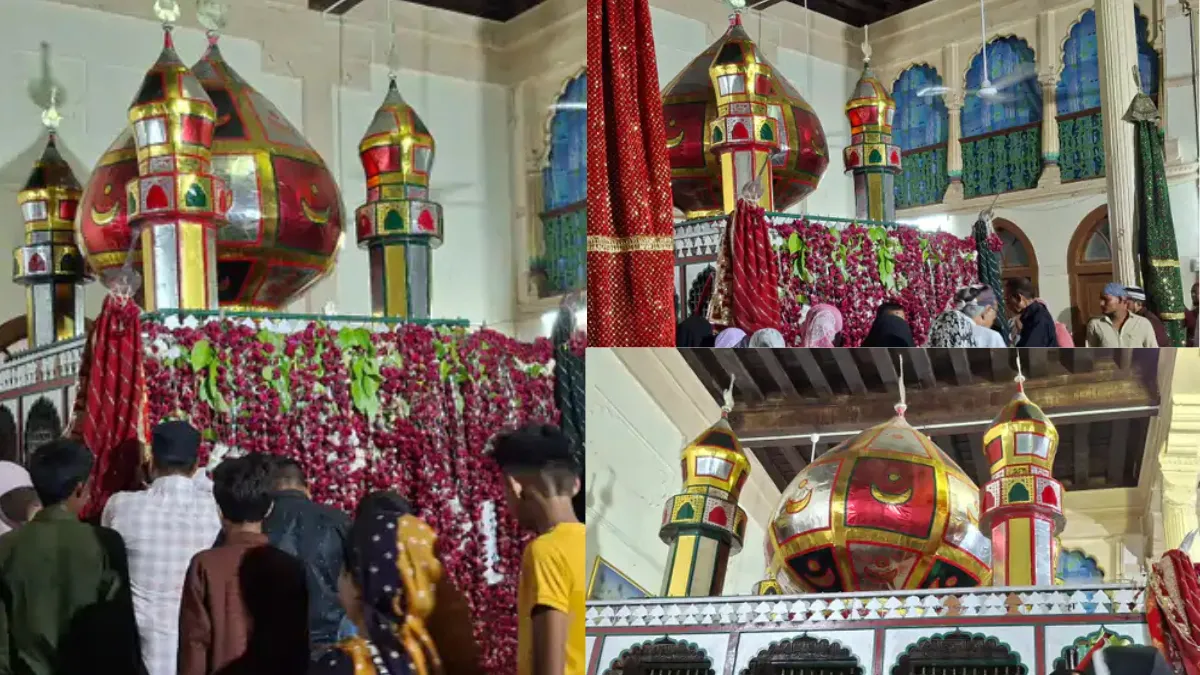
Historic 11-Tonne ‘Jari Mubarak’ Remains a Symbol of Faith and Tradition
Khambhat’s Sandalwood Taajiya: As preparations for Muharram gather pace across Gujarat, the historic town of Khambhat is once again witnessing a surge of visitors eager to see one of India’s most remarkable religious symbols. The famed Khambhat’s Sandalwood Taajiya, known locally as “Jari Mubarak,” has been placed for public viewing at the town’s historic Darbar Gadh, attracting large numbers of devotees and visitors.
Renowned for its unique craftsmanship, religious significance, and extraordinary weight, the taajiya is considered among the heaviest of its kind in the world. The structure has remained an important part of Khambhat’s Muharram traditions for generations and continues to be a source of pride for the local community.
A Tradition Rooted in Centuries of History
Khambhat, once an important princely and trading center on Gujarat’s coast, has a long association with Muharram observances. Historical records and local traditions indicate that the city’s Shia rulers and Nawabs organized Muharram commemorations with great devotion and grandeur. Even after political changes over the centuries, many of these customs have been preserved.
The Khambhat’s Sandalwood Taajiya is believed to have been established at Darbar Gadh in the late 18th century and has since become one of the most recognizable symbols of Muharram in the region. Its continued preservation reflects the community’s commitment to maintaining historical and religious heritage.
Muharram and the Legacy of Imam Hussain
Muharram is observed by Muslims around the world in memory of the martyrdom of Imam Hussain, the grandson of Prophet Muhammad, and his companions during the Battle of Karbala in 680 CE. The occasion serves as a reminder of sacrifice, justice, and faith.
In many parts of India, commemorations include religious gatherings, mourning processions, and the display of taajiyas—symbolic representations associated with the shrine of Imam Hussain. In Khambhat, the historic sandalwood taajiya occupies a special place within these observances.
Procession to Follow Traditional Route
According to local tradition, the taajiya will be taken out on the 10th day of Muharram. The procession is expected to begin near the Juma Mosque along the seafront and travel through several historic parts of the city, including Three Gates, Chitari Bazaar, Peeth Bazaar, and Lal Darwaza.
The final destination of the procession is Nareshwar Talav near Lalbagh, where traditional rituals associated with the conclusion of the journey will be performed. Every year, residents and visitors line the route to witness the event, which combines religious devotion with a strong sense of cultural heritage.
The Unique Tradition of Carrying ‘Jari Mubarak’
One of the most striking aspects of the procession is the manner in which the massive taajiya is transported. Weighing approximately 11 tonnes, or around 550 maunds according to traditional measurements, the structure is carried manually by members of the Muslim community.
Participants follow the long-standing custom of carrying the taajiya barefoot on their shoulders from Darbar Gadh to Nareshwar Talav. The practice is regarded as an expression of respect, devotion, and remembrance associated with Muharram.
Because of its immense size and weight, the procession requires significant coordination and participation from the community, making it one of the most distinctive Muharram traditions in Gujarat.
Also read: Vantara Niwas Jamnagar Emerges as a New Benchmark for Luxury Wellness in India
Among the Heaviest Taajiyas in the World
The Khambhat’s Sandalwood Taajiya is widely regarded as the second-heaviest taajiya in the world. Its scale and historical importance have made it a point of interest not only for devotees but also for historians and cultural enthusiasts.
Notable Heavy Taajiyas in India
| Location | Estimated Weight | Significance |
|---|---|---|
| Sheikhpura, Bihar | More than 25 tonnes | Considered the world’s heaviest taajiya |
| Khambhat, Gujarat | Around 11 tonnes | Known as the historic “Jari Mubarak” sandalwood taajiya |
The taajiya in Sheikhpura village of Bihar’s Siwan district is believed to be the world’s heaviest. Historical accounts suggest that it dates back to the early 19th century and is constructed using a robust combination of wood and iron. During Muharram, hundreds of devotees from different communities come together to carry the enormous structure, reflecting a spirit of unity and shared tradition.
Also read: Jasdan Patari Gets GI Tag: Traditional Gujarat Handicraft Earns Prestigious Recognition
A Living Heritage of Khambhat
For residents of Khambhat, the annual display and procession of Khambhat’s Sandalwood Taajiya is more than a religious event-it is a living connection to the city’s rich history. As Muharram approaches, the centuries-old “Jari Mubarak” continues to inspire devotion, attract visitors, and preserve a tradition that has endured through generations.
With thousands expected to witness the procession this year, the historic taajiya remains a powerful symbol of faith, craftsmanship, and cultural continuity in one of Gujarat’s oldest towns.