Surat Maya Bhai Ahir Statement Controversy Sparks Political Row After Remarks on Taxpayers and Public Criticism of Police
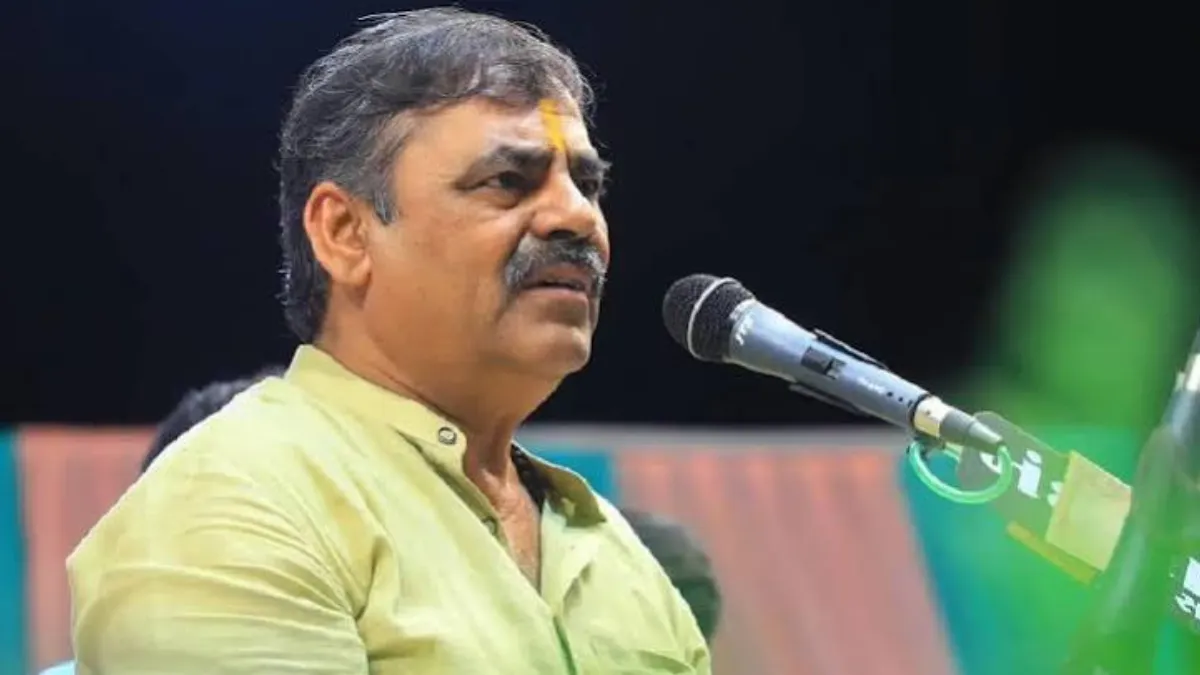
Surat Maya Bhai Ahir Statement Controversy has triggered widespread debate in Gujarat after comments made by popular folk artist Maya Bhai Ahir during a police farewell event drew criticism from political leaders and sections of the public. A remark suggesting that many people who question the police “live on rationed wheat” and do not pay taxes quickly spread across social media, prompting a strong response from the Aam Aadmi Party (AAP).
The controversy began after a farewell function for a recently retired police officer in Surat, where several well-known folk performers shared the stage. What started as a cultural celebration has now developed into a political issue, with questions being raised about taxpayers’ rights, public accountability, and freedom to criticize government institutions.
Police Farewell Event Turns Into a Public Debate
The event was organised in Surat on July 2 to honour Jayrajsinh Gadhvi, who retired shortly after being promoted to the rank of Police Inspector (PI). The farewell ceremony featured a large folk music programme attended by members of the Surat police family and invited guests.
Several renowned artists participated in the event, including folk storyteller Maya Bhai Ahir, celebrated singer Kirtidan Gadhvi, and playback singer Maithili Thakur. The programme was intended as a tribute to the retiring officer, but a portion of Maya Bhai Ahir’s speech soon became the centre of attention online.
Remarks on Taxpayers Go Viral
While addressing the audience, Maya Bhai Ahir spoke about people who record videos of police personnel and question their conduct. During his speech, he criticised individuals who often tell government employees that their salaries are paid from taxpayers’ money.
According to videos circulating on social media, Ahir suggested that many of those making such statements themselves do not pay taxes and instead rely on subsidised ration supplies. The comments were interpreted by many viewers as dismissive towards ordinary citizens who question public officials.
Within hours of the event, clips of the speech were widely shared across social media platforms, leading to sharp reactions from users who argued that indirect taxes are paid by almost every citizen, regardless of income level.
AAP Leader Mahesh Anaghad Responds
Former Aam Aadmi Party corporator Mahesh Anaghad strongly criticised the remarks, accusing Maya Bhai Ahir of insulting citizens and taxpayers.
Speaking to the media, Anaghad argued that even the poorest people contribute to the country’s tax system through indirect taxes. He pointed out that when a low-income family purchases everyday items such as milk, biscuits, or other consumer goods, taxes are included in the price, making them taxpayers as well.
He questioned how anyone could claim that ordinary citizens have no right to remind public servants that their salaries are funded through public money.
According to Anaghad, every citizen deserves respect regardless of their financial background, and public figures should avoid making statements that undermine the dignity of taxpayers.
Citizens Have the Right to Question Public Institutions
Expanding on his criticism, Anaghad defended young people who record videos of police actions and upload them on social media.
He said many citizens do so because they believe it is their civic responsibility to highlight wrongdoing whenever they witness it. In his view, documenting public officials’ conduct promotes accountability rather than disrespect.
The former corporator maintained that no public personality has the authority to ridicule people for exercising their democratic rights or questioning government institutions.
He also emphasised that criticism of individual police actions should not be interpreted as criticism of the entire police force.
Political Allegations Against the BJP
The controversy intensified when Anaghad accused Maya Bhai Ahir of remaining silent on larger public issues while targeting ordinary citizens.
Without providing evidence for his claims, the AAP leader alleged that artists close to the ruling Bharatiya Janata Party (BJP) avoid raising uncomfortable questions about governance because of political affiliations. He further claimed that such individuals praise the government while ignoring issues that affect the public.
Among the concerns he mentioned were illegal liquor activities despite prohibition in Gujarat, challenges faced by farmers, and other governance-related matters.
Anaghad questioned why stronger criticism is not directed toward these issues if public accountability is truly the objective.
Debate Over Taxpayer Rights
The incident has also revived a broader discussion about taxation in India.
Economists often distinguish between direct taxes, such as income tax, and indirect taxes, which are included in the prices of goods and services purchased by consumers. While not every citizen pays income tax, almost everyone contributes through indirect taxes when buying products or using taxable services.
This distinction became a major point in the political response, with critics arguing that it is inaccurate to suggest that only income taxpayers financially support government institutions.
Supporters of public accountability also argue that citizens have the constitutional right to question public authorities, including the police, provided they do so peacefully and within the law.
Also read: Una Murder: Woman Killed After Domestic Dispute Allegedly Turns Violent; Husband Arrested
Social Media Divided Over the Remarks
The viral video has generated mixed reactions online.
Some users defended Maya Bhai Ahir, saying his comments were aimed at individuals who unnecessarily provoke police officers or misuse social media to create sensational content. They argued that his statement should be understood in the context of maintaining respect for law enforcement.
Others, however, viewed the remarks as an unfair generalisation that belittled ordinary citizens. Many social media users stressed that taxpayers come from every economic background and that public servants remain accountable to the people.
The online debate has continued for several days, with clips from the event being widely shared and discussed across various platforms.
No Official Response Yet
As of now, there has been no official statement from Maya Bhai Ahir addressing the criticism surrounding his remarks. Likewise, no response has been issued by the organisers of the farewell programme or the Surat Police regarding the political controversy that followed the event.
With discussions continuing both online and in political circles, the Surat Maya Bhai Ahir Statement Controversy has evolved beyond a single speech into a larger conversation about public accountability, taxpayers’ rights, freedom of expression, and the relationship between citizens and government institutions in a democratic society.
Related News